Wichita, KS · Garage Door Service
Wichita Garage Door Pros repairs and maintains commercial overhead doors across the metro, from spring swaps to opener fixes built for cold-season wear.
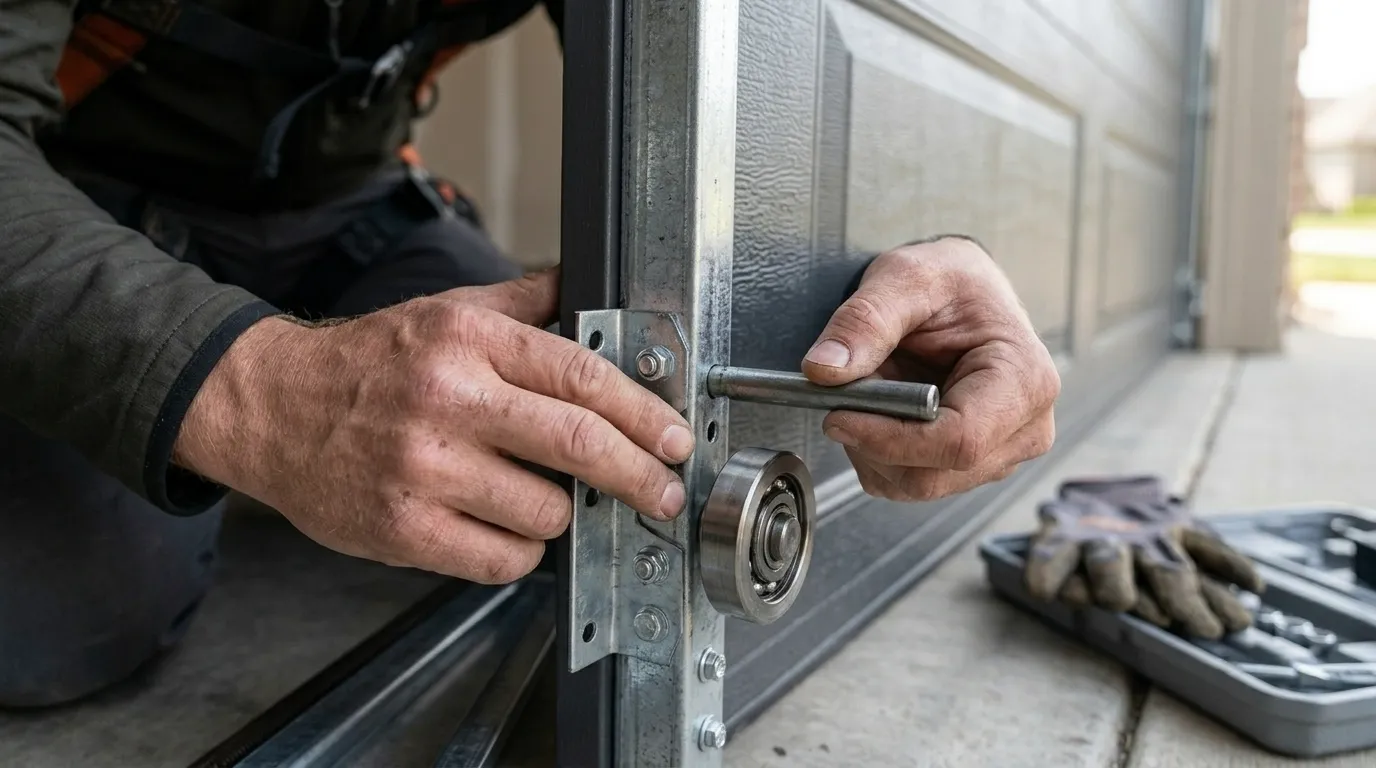
Most calls start the same way: a bay door that won't open, won't close all the way, or slams down on its own. We check the torsion spring first because on a commercial door that's the part doing the heavy lifting, and on the sectional steel doors common across this metro it's usually sized for a specific door weight that doesn't forgive substitutes. From there we run the track, check the rollers for flat spots, and test the opener's force and limit settings against the photo-eye alignment. On multi-door properties - strip retail, light industrial, self-storage - we look at every bay on the property in one visit rather than treating each door as its own job, since the hardware age and wear pattern is usually the same door to door. Panel damage gets judged on its own: a dented lower section on an otherwise sound door gets a section swap, not a full replacement. We carry the parts that fail most on 1980s-90s stock - standard-lift torsion springs, steel rollers, common photo-eye units - because that's what shows up bay after bay across the service area. What we don't stock on the truck is anything custom: oversized commercial doors or non-standard openers sometimes mean a return trip once the part is ordered.
A lot of the light-industrial and retail buildings that ring Wichita went up in the same building window as the subdivisions around them - 1975 to 2011, with most of the stock dating to the 1980s and 90s. That matters for commercial doors because it means a huge share of the bays across the 14 named areas we cover are running the same generation of torsion spring, the same gauge track, and the same vintage of opener logic board. None of that was built for forty years of daily cycling. Add in the cold-moderate climate band this part of Kansas sits in, and you get steel panels and springs going through wider seasonal swings than a market that stays mild year-round. Cold contracts the steel skin faster than the frame around it, which tightens tolerances at the track just enough to turn a slightly worn roller into a binding one. Springs that were fine in August start showing fatigue in January because cold steel is less forgiving under load. None of this is a manufacturing defect - it's an entire metro's commercial door stock aging on the same clock, in a climate that stresses it twice a year instead of once.
The most common complaint we get on commercial calls is a door that opens fine in the afternoon and won't open at all first thing in the morning - or opens partway and reverses. That's almost always a cold-stiffened roller or a photo-eye pushed slightly out of alignment by a temperature-driven shift in the track bracket, not a broken opener. A close second is a door that sounds different than it used to: a grinding or popping noise on the way down usually means a spring under uneven tension, which on a commercial door carrying more weight than a residential one tends to fail faster once it starts. Sagging on one side of a wide bay door, where one end drags along the track, points to a roller or hinge that's worn unevenly - common on doors that get run dozens of times a day. None of these are emergencies the first day they show up. They are emergencies the week someone ignores them, because a spring or cable under uneven load on a commercial-weight door doesn't fail gently.
Cleaning the photo-eye lenses, tightening loose bolts on the track brackets, and lubricating rollers and hinges are fine to do yourself, and doing them on a schedule cuts down on a lot of the cold-weather callouts we see. What you shouldn't touch is anything under spring tension. A commercial torsion spring is sized for a door that can weigh several hundred pounds, and the tension stored in it when the door is down is enough to break bones or worse if the winding bar slips. Cable replacement is the same story - a cable under load that snaps doesn't stay where you left it. If a bay door is sagging on one side, grinding, or reversing without a clear obstruction, that's a call, not a project. The honest limit on our end: we don't stock every custom opener board or oversized commercial spring on the truck, so some jobs need a part ordered before we can finish the repair in one visit.
We don't have a fixed interval to quote you, but doors cycling many times a day in a cold-moderate climate like this one wear faster than a low-traffic residential door. Catching a stiff roller or a slightly misaligned photo-eye before winter tends to prevent the morning-lockout calls we see most.
Steel contracts faster than the surrounding frame when temperatures drop, which tightens track tolerances just enough to turn a worn roller or slightly loose bracket into a binding point. It's a seasonal symptom of hardware that's already aging, not a new problem showing up out of nowhere.
Depends on what's failing. A worn spring, roller, or opener board on an otherwise sound door is a repair. If the track is bent, the panels are rusted through, or you're replacing the same part every year, replacement usually costs less over time - we'll tell you which one it is when we look at it.
Call or request a quote - tell us what your door is doing and where you are.
