Wichita, KS · Garage Door Service
Opener repair for Derby's 1990s-era steel sectional doors, chain-drive units, and cold-weather sensor faults. Serviced from Wichita, 10 miles out.
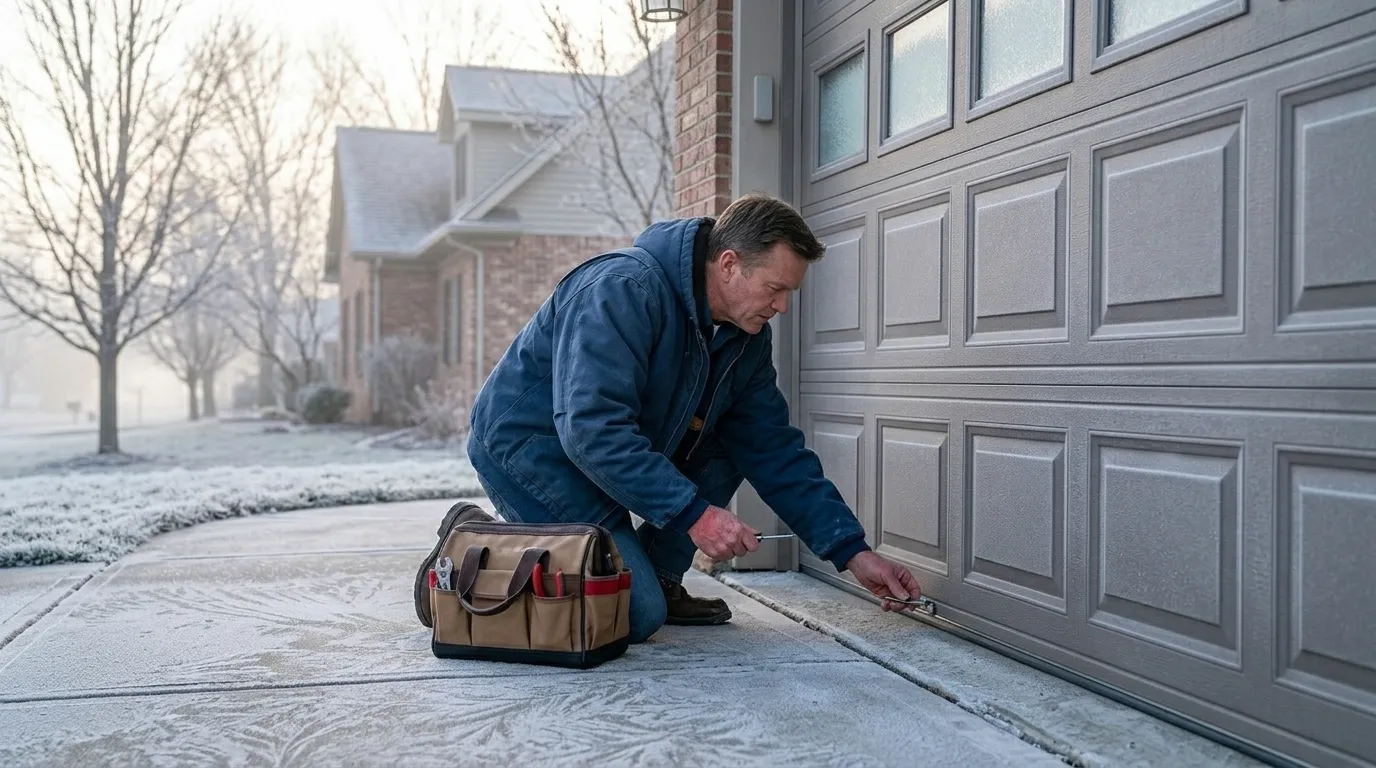
Most garages in Derby went up around 1990, and the door hanging on them today is almost always a steel sectional panel, two-car width, paired with a half-horsepower chain-drive opener that came with the house as a builder-grade unit. That's not a knock - it's just what got installed on tract housing in this era, and thirty-plus years later, those same chain-drive motors are the ones we get called out to. The logic boards are dated, the drive gears are original, and the wall control is usually the same push-button unit from the day it went in.
We don't quote opener repair pricing sight-unseen because the failure point changes what the job costs - a stripped gear kit is a different repair than a fried circuit board or a dead capacitor, and Derby's housing stock throws all three at us regularly given the age. What we can tell you: we don't add a mileage charge for the 10-mile run out from Wichita, and we diagnose on-site before we touch anything, so you know the actual fault before you agree to a repair versus a full opener swap. If the motor's original to a 1990-built house, replacement often makes more sense than another repair - we'll tell you straight which side of that line your job falls on.
Derby sits in a cold-moderate climate band, and that matters more for openers than most homeowners expect. The failure isn't the cold snapping something outright - it's the freeze-thaw cycling that works on solder joints, capacitor seals, and the photo-eye sensor alignment at the base of the track. A sensor that's a quarter-inch out of true reads fine in July and refuses to close the door in January, because condensation and contraction have shifted the bracket just enough.
On a chain-drive opener from a 1990s build, the other common failure is the drive gear - a plastic gear inside the motor housing that wears down over decades of use and eventually strips, so the motor runs but the door doesn't move. That's a distinct repair from a circuit board failure, and distinct again from a dead travel module, but all three show up on the same class of door because Derby's housing stock is old enough now that original hardware is reaching end of life across the board, not on any one house. It's less about a single bad batch of openers and more about a whole neighborhood of doors hitting the same age wall at roughly the same time.
Some of this is fair game for a homeowner with a ladder and patience. Realigning a photo-eye sensor is usually a five-minute job - loosen the bracket screw, nudge it until the light stops blinking, tighten it back down. Reprogramming a remote or keypad is in the manual, if you still have it, or on a sticker inside the motor housing.
What we don't recommend touching yourself: anything involving the torsion spring on the door itself, or opening the motor housing to get at the drive gear or circuit board. The spring is under load strong enough to cause real injury, and a stripped drive gear kit needs the exact match for your opener's model year - guess wrong and you've bought a part that doesn't fit a 1990s chain-drive unit built to different tolerances than what's sold today. If the opener runs but the door won't move, or the door reverses without hitting anything, that's a call, not a weekend project.
We run this job out of Wichita, about 10 miles from Derby, and we don't tack on a trip charge for that distance. Call, tell us the symptom - dead motor, stripped gear, sensor fault, remote that quit working - and we'll get a sense of what it likely is before the truck rolls, though the real diagnosis happens on-site with the housing open.
Derby's part of a service area with roughly 39,080 households total, and Derby alone accounts for about 10,329 of those - enough volume that we see this specific opener-and-door combination regularly, not as a one-off. If you're not sure whether the fault is in the opener or the door hardware itself, start with our Derby garage door repair page, which covers the door side, or the full opener repair page for Wichita if you want the broader rundown on opener failures across the area.
The photo-eye sensors and internal wiring on an opener from the early 1990s are decades past their design life, and freeze-thaw cycling works on solder joints and sensor brackets over time. A sensor that's slightly misaligned reads fine in warm weather but throws an error once temperatures drop, because minor contraction shifts it just enough to break the beam.
Depends on the fault. A sensor realignment or a capacitor swap is cheap and worth doing. A stripped drive gear or a dead circuit board on a motor this old often costs close to what a new opener runs, so we'll usually recommend replacement once you're into that territory - we'll tell you which side of that line you're on before we start.
No. We run out of Wichita, about 10 miles away, and that distance doesn't add a trip charge to the job. What you pay for is the diagnosis and repair itself, priced once we've seen the actual fault.
The motor swap itself isn't the hard part. Matching the new unit to your existing track, door weight, and safety sensor wiring on a house built around 1990 is where people get it wrong, and a mismatched opener can put uneven strain on the door's spring system. We'd rather you call than guess on that fit.
Call or request a quote - tell us what your door is doing and where you are.
