Wichita, KS · Garage Door Service
Rollers on Derby's 1990-era doors wear differently than older Wichita stock. See what a roller job costs, why it fails here, and how the drive from Wichita affects your call.
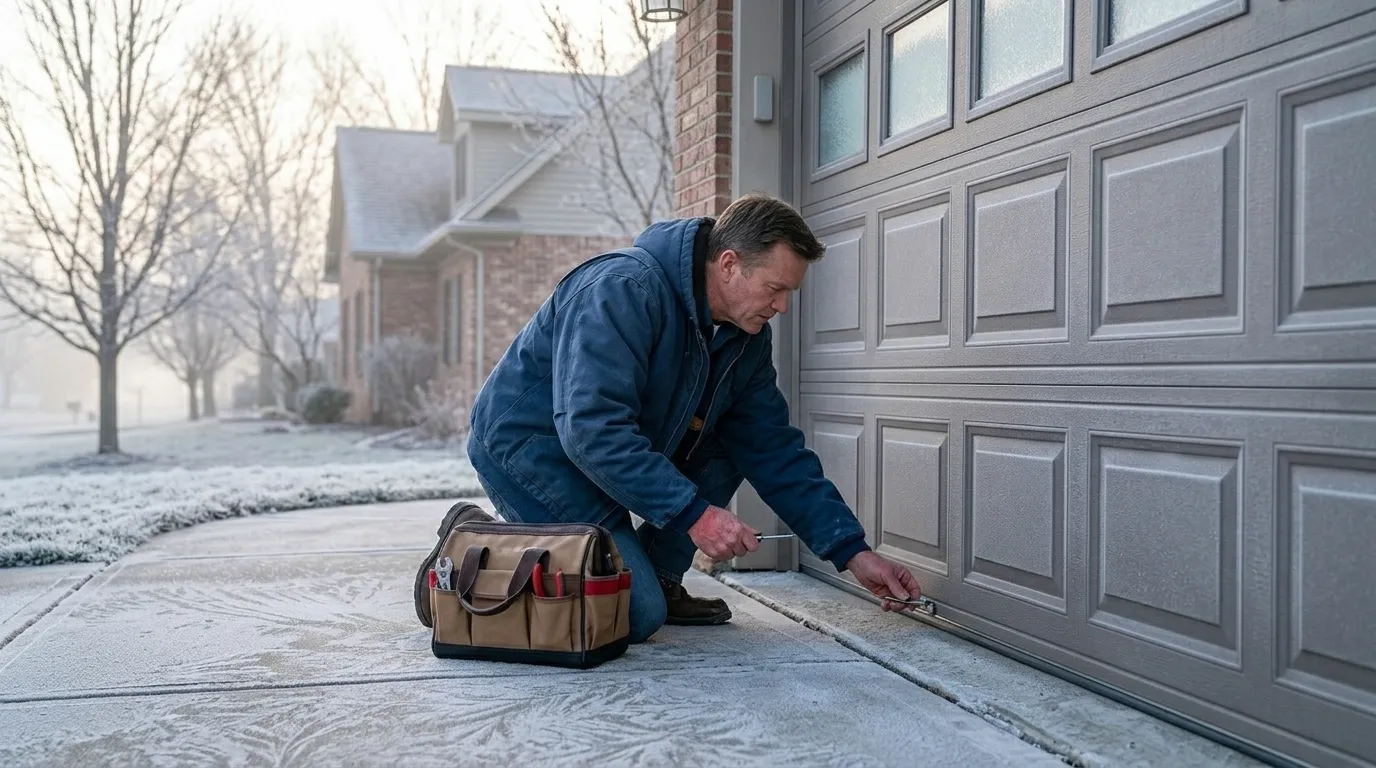
The drive out to Derby is about 10 miles from our Wichita base, and that distance is baked into how a roller call here gets scheduled - it's not a same-hour drop-in, it's a routed stop, so when you call it helps to know what you're actually paying for once the truck arrives.
Roller replacement itself is a parts-and-labor job: the rollers, the track adjustment that goes with them, and the time to check the rest of the hardware while the door is open anyway. Derby's housing stock centers around 1990, which is later than a lot of the older Wichita-area neighborhoods, so you're less likely to be fighting a door built for hardware nobody stocks. That's a small mercy on cost - most of these doors take standard 10-ball or 7-ball rollers, steel or nylon, nothing exotic.
We don't have a fixed price to quote you sight unseen, and we won't pretend we do. What we can tell you is that a straightforward roller swap on a door from this era is a smaller job than a spring or opener repair, and it's usually done in one visit once the truck is on site. If your rollers have been off track long enough to bend a hinge or dent a panel, that changes the scope, and we'll tell you before we start.
A door built around 1990 - which covers most of Derby's stock - was hung with rollers designed for a couple decades of use, not three-plus. By now those original rollers are past their intended life whether or not the door ever gave you trouble, and that's a straight function of the build year, not bad luck.
The other piece is the cold. This area sits in a cold-moderate climate band, which means the nylon rollers common on doors from this era go brittle and crack in winter cold, then swell and bind in summer heat - the freeze-thaw cycle nylon handles worse than steel. On a door that's been opening and closing for over thirty years in that cycle, you'll often see the roller stems worn oval in the track before the roller itself visibly fails, which is why a door can sound rough for months before it jumps track.
We don't see much call for exotic roller upgrades out here - the housing stock doesn't call for it. What we do see is worn stems, bent track from rollers that seized, and hinges pulling loose from years of a door riding rough. Any one of those on its own is a simple fix. Ignored together, they turn a roller job into a track-and-hinge job.
Rollers are one of the more DIY-friendly garage door parts, and on a standard door from this era, a homeowner with the right tools can swap the bottom rollers without much drama - they're usually not under spring tension.
The rollers near the top of the track are a different story. Getting to them safely often means dealing with the torsion spring assembly, and that's where we'd tell you to stop. Springs on doors this size store enough force to cause a real injury if you don't know exactly what you're doing, and we're not going to walk you through defeating that safety margin in a page like this.
If your track is bent, your hinges are pulled, or the door is riding rough enough that it's binding rather than just noisy, that's also past the point where swapping a roller fixes the actual problem. At that point you're better off having someone look at the whole run of track and hardware, because a new roller in a bent track will just wear out again fast. Know your limit, do the easy half yourself if you want, and call for the rest.
We run out of Wichita and cover Derby as part of our regular route, about 10 miles out - which means booking works best when you can tell us a bit about what the door's doing (grinding, jumping track, one side dragging) so we know what to bring before the truck leaves.
We don't keep a branch or crew stationed in Derby, so we're not going to promise a same-hour arrival - that's not honest and we'd rather you know that going in than get a call we can't back up. What we can do is get a job scheduled and bring the right rollers for a door built in this era, along with the track hardware to go with it if the inspection calls for it.
If you're not sure whether this is a roller problem or something bigger - a spring, an opener, a full door - our Derby repair page covers diagnosis for the whole range of issues we see out here: Derby Garage Door Repair. If you're comparing costs against the broader Wichita-area job, that's covered separately here: Garage Door Roller Replacement in Wichita, KS.
We don't quote a fixed number without seeing the door - the cost depends on how many rollers, whether it's steel or nylon, and whether the track needs adjustment too. What we can tell you is it's a smaller job than a spring or opener repair, usually finished in one visit.
Most Derby homes were built around 1990, so original rollers on unrenovated doors are past their expected life. Add in the cold-moderate climate cycle, which is hard on nylon rollers specifically, and you get stems worn oval or rollers cracking well before most owners expect.
The bottom rollers, often yes, since they're usually not under spring tension. The top rollers near the torsion spring are riskier to access safely, and we'd tell you to call rather than defeat a spring assembly you're not familiar with.
No. We run out of Wichita, about 10 miles from Derby, and cover it as part of our regular route. We won't promise a same-hour response since there's no local branch - we'll give you a real schedule when you call.
Call or request a quote - tell us what your door is doing and where you are.
