Wichita, KS · Garage Door Service
Goddard homes built after 2003 use lighter track and roller hardware than older Wichita-area houses. Here's what actually knocks a door off its track here.
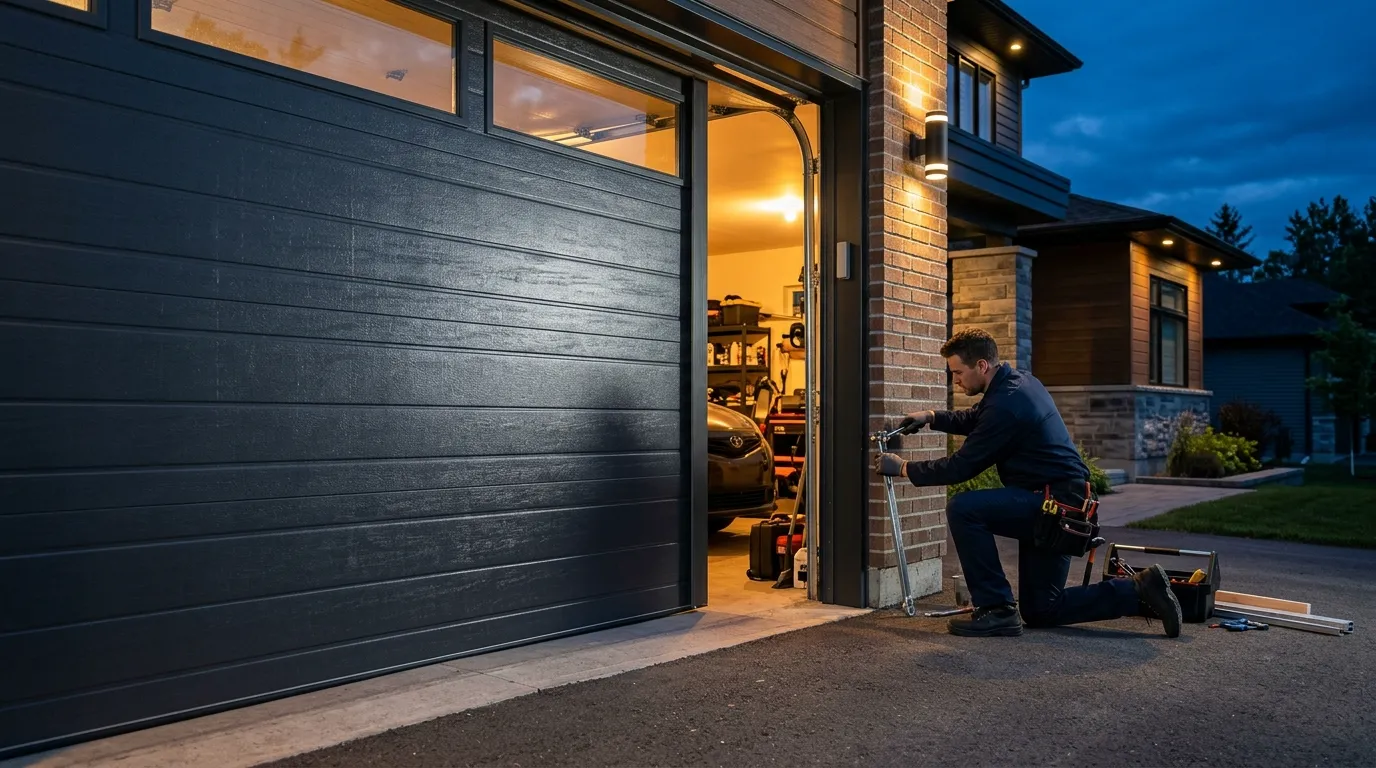
We run out of Wichita, about 12 miles from Goddard, so there's no local branch to swing by - you call, tell us the door is off the track, and we schedule a truck out to you. Because Goddard's housing stock is mostly newer than the rest of the service area (median build year 2003 versus the 1988 median across the wider territory), we ask what year the house was built and whether the door is original. That one detail tells us whether we're bringing parts for a stamped-steel track system on nylon rollers or something older. We don't keep a Goddard-specific inventory truck, so if the fix needs a part outside the common sizes, there can be a short wait - we'll tell you that on the phone, not after we've already opened the panel. Bring the door's brand and model if you have it; most doors from the early 2000s have a sticker on the inside rail. That saves a trip back to the truck and gets the door back on track faster.
If a roller has simply jumped the track and the door still moves an inch or two by hand, some homeowners can walk it back in with a rubber mallet and a pry bar, provided the track brackets aren't bent and the cable is still on the drum. That's the honest limit of the DIY version. Past that - bent track, a roller stem sheared off, or the door hanging crooked in the opening - you're working next to a loaded spring and a door that can drop without warning, and that's not a repair we'd tell anyone to attempt solo. Homes built in the 2003 range in Goddard typically run lighter-gauge track than the heavier steel used on older doors elsewhere in the area, which bends more easily under the same amount of force, so what looks like a small jolt can do more damage than it would on an older door. If you're not sure whether the track is straight, it usually isn't, and that's the point to stop and call.
Most of Goddard's housing went up well after 1988, which puts a good share of it in the stamped-steel track and nylon-roller era rather than the heavier rolled track and steel rollers common on older stock elsewhere in the service area. That lighter track holds alignment fine under normal use, but it's less forgiving once something knocks it out of square - a car bumper, a basketball, a garage door opener that's been over-tightened on the down-limit. On these newer doors, off-track failures more often trace back to a bent bracket or a stripped roller bracket screw than to a snapped cable, which changes what we bring on the truck and how long the fix takes. We also see extension-spring setups on some of the smaller single doors built in this era, which fail differently than the torsion systems more common on double doors - the door drops unevenly on one side before it ever leaves the track, and that uneven drop is usually what bends the track in the first place.
This region sits in a cold-moderate climate band, and that matters for a newer door more than people expect. Lighter stamped track flexes slightly with temperature swings, and repeated freeze-thaw cycles over a winter can work a track bracket loose a fraction at a time until the door finally jumps the rail on a cold morning. On the 1980s-and-older stock common elsewhere in the wider Wichita area, the heavier track and steel rollers absorb more of that movement before anything shifts. Goddard's newer subdivisions also mean concrete slabs that are still settling relative to older, long-set foundations, and a slab that's dropped even slightly on one side pulls the track out of plumb over months, not all at once. That's a slow failure, not a sudden one, and it's why an off-track call here often turns out to be a bracket and alignment fix rather than a full hardware swap - one honest limitation being that if the track itself is bent rather than just loose, straightening it rarely holds for long and replacement is the better call.
Houses built in Goddard trend newer than much of the wider service area - the median build year here is around 2003, well after 1988. Builders in that era mostly used lighter stamped-steel track and nylon rollers instead of the heavier rolled track and steel rollers common on older homes, so the hardware, and how it fails, is genuinely different.
No. We work out of Wichita and drive to Goddard, about 12 miles out, for every call. There's no local branch here, so booking means a scheduled truck visit rather than a walk-in shop.
Only if the track and brackets are still straight and the door still moves freely by hand - that's a real but narrow case. If the track is bent, a roller is sheared, or the door hangs crooked, you're working near a loaded spring and should call rather than force it.
On newer, lighter track systems common in Goddard's housing, slab settling and seasonal freeze-thaw cycling can loosen a track bracket gradually over months. The door can jump the rail on an ordinary morning with no collision at all - it's the slow finish of a problem that's been building.
Call or request a quote - tell us what your door is doing and where you are.
