Wichita, KS · Garage Door Service
Wichita homes mostly date 1975-2011, median 1988, across 14 named areas. Here's what that housing age and our cold-moderate winters mean for your garage door.
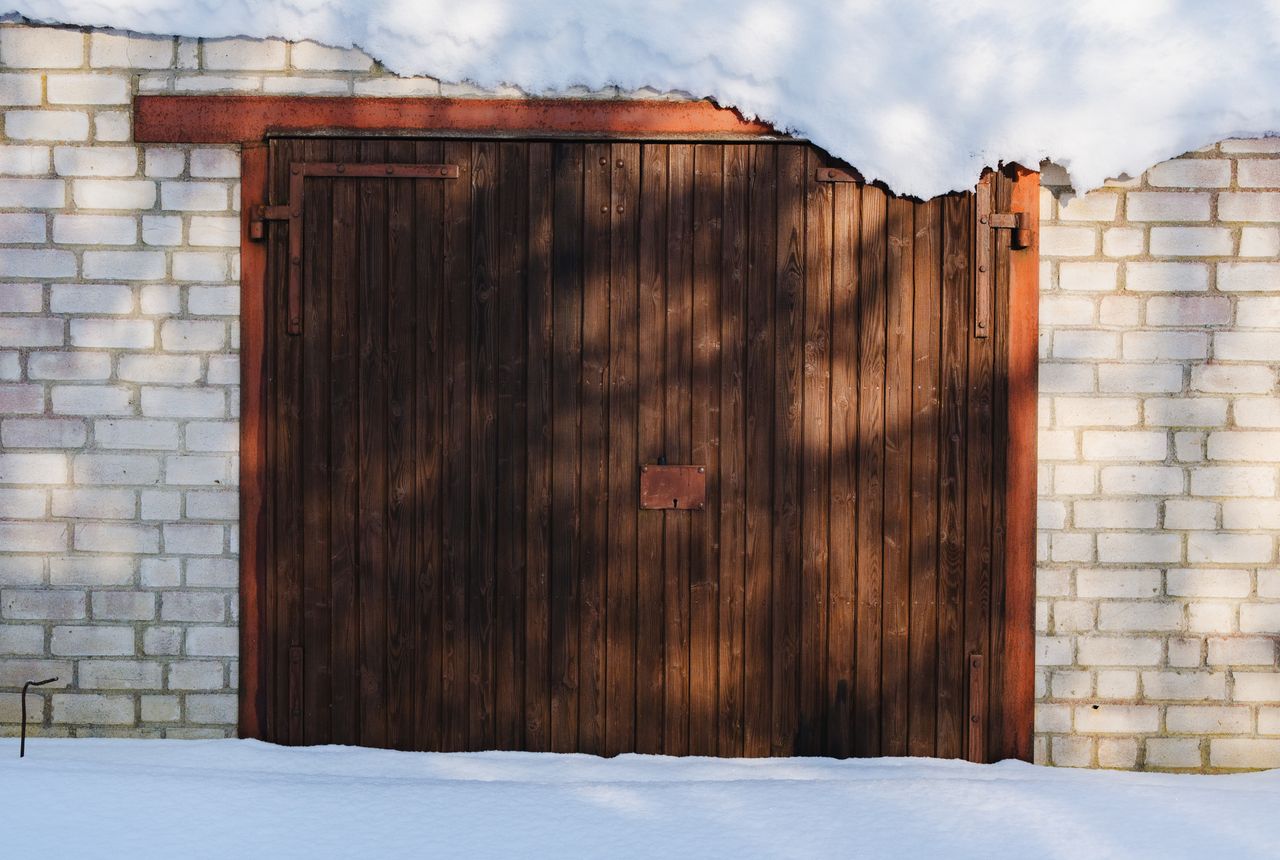
Most houses in the Wichita area went up between 1975 and 2011, with the median build year sitting around 1988. That matters because a door and opener installed when a house was built is now somewhere between 12 and 48 years old, and the springs, rollers, and opener gears wear out on a schedule, not a whim. Walk out to your garage and look at the torsion spring above the door - if it's still the original factory-wound spring on a house from the 80s or 90s, it's well past the cycle count it was rated for. Check the bottom seal too. On houses this age the original vinyl weatherstrip has usually hardened and cracked, which lets cold air and grit under the door. Lift the door by hand with the opener disconnected - if it doesn't stay put roughly where you let go, the spring tension is off and that's not a DIY fix. Listen for grinding on the way up, which usually means dry or pitted rollers rather than anything with the motor. None of this takes tools beyond a flashlight and a step ladder, but if the door won't hold its position when disconnected, stop there and call someone - that's a stored-energy spring problem.
What you can't check yourself: whether the opener's internal gear kit is original or already replaced. That's inside the housing.
Across the 14 named areas that make up the Wichita service area, the housing stock clusters tightly in the 1980s and 90s, which means a huge share of garage doors and openers are original equipment nearing or past end of service life at the same time. That's not a coincidence of bad luck house to house - it's a wave. Torsion springs rated for 10,000 cycles start failing in that 25-to-35-year window regardless of how carefully they were used, and openers from that era with chain drives and older logic boards are reaching the point where replacement parts are getting harder to source, not easier. The other piece is scale: with roughly 39,080 households and 23,179 owner-occupied houses in the service area, a lot of that original equipment is aging out in the same handful of years, which is why spring failures and opener calls tend to bunch up rather than trickle in steadily. The honest limitation here: if your opener logic board has failed on a unit from the early 90s, we're not always able to find an exact replacement board, and a full opener swap is often the more realistic call than chasing discontinued parts.
Wichita sits in a cold-moderate climate band, which means winters cold enough to matter for a garage door but not so severe that everything gets built for it as standard. That combination is where problems hide. Steel tracks and torsion springs both stiffen and lose lubrication in cold weather, and on a house built in the 80s or 90s, the original grease has usually gone gummy or dried out entirely by now - so a door that worked fine in September starts binding or slamming down hard in January. Rollers age the same way; nylon rollers from that era get brittle in the cold and start chipping at the edges, which shows up as a rattling or grinding sound that gets worse the colder it gets. None of this requires a hard freeze to show up - moderate cold cycling through the winter is enough to work old grease and old seals loose over a couple of decades. With median household income in the service area around $82,000, most owners here are in a position to choose a full opener or spring replacement rather than patchwork repairs when a unit reaches that point, and for equipment this old, that's usually the more sensible call anyway.
The mistake we see most is treating a noisy or slow door as cosmetic because the house is only 30-something years old and "shouldn't have problems yet." But 30-plus years is exactly the window where original springs and rollers from the 1975-2011 building boom start failing, whether the house is in Riverside, Old Town, Sunflower, or out toward Bel Aire or Maize. People also assume that because their neighborhood was built in a similar era, their door and opener are on the same schedule as the house next door - but usage matters as much as age, and a door opened twice a day for 35 years wears differently than one opened six times a day. The second mistake is waiting for a full failure before calling anyone. A spring that's visibly stretched or a door that drifts down slowly when disconnected is telling you it's near the end, and catching that before it snaps under tension is safer and usually cheaper than an emergency call after the cable comes off the drum. We don't recommend re-tensioning a 30-year-old spring as a stopgap - at that age, replace it outright rather than patch it.
At that age, the spring and opener are past their rated life either way. If the track and panels are still straight, replacing the spring and opener rather than the whole door usually makes sense. If the panels are dented or the track is bent, full replacement is the more realistic call.
Cold stiffens grease on rollers and the torsion spring, and on doors from the 1980s-90s stock common here, that original lubrication has usually broken down by now. Moderate cold cycling over the years dries out seals too, so noise tends to build gradually each winter rather than show up all at once.
Yes, the service area covers Wichita and the surrounding named areas including Bel Aire, Park City, Maize, Haysville, Valley Center, Derby, Goddard, Andover, Colwich, and Rose Hill.
Call now or request a free quote - same-day service on most repairs, upfront written pricing.
