Wichita, KS · Garage Door Service
Torsion spring, track, and opener repair for Wichita houses built 1975-2011. We know the steel doors and galvanized hardware this era shipped with.
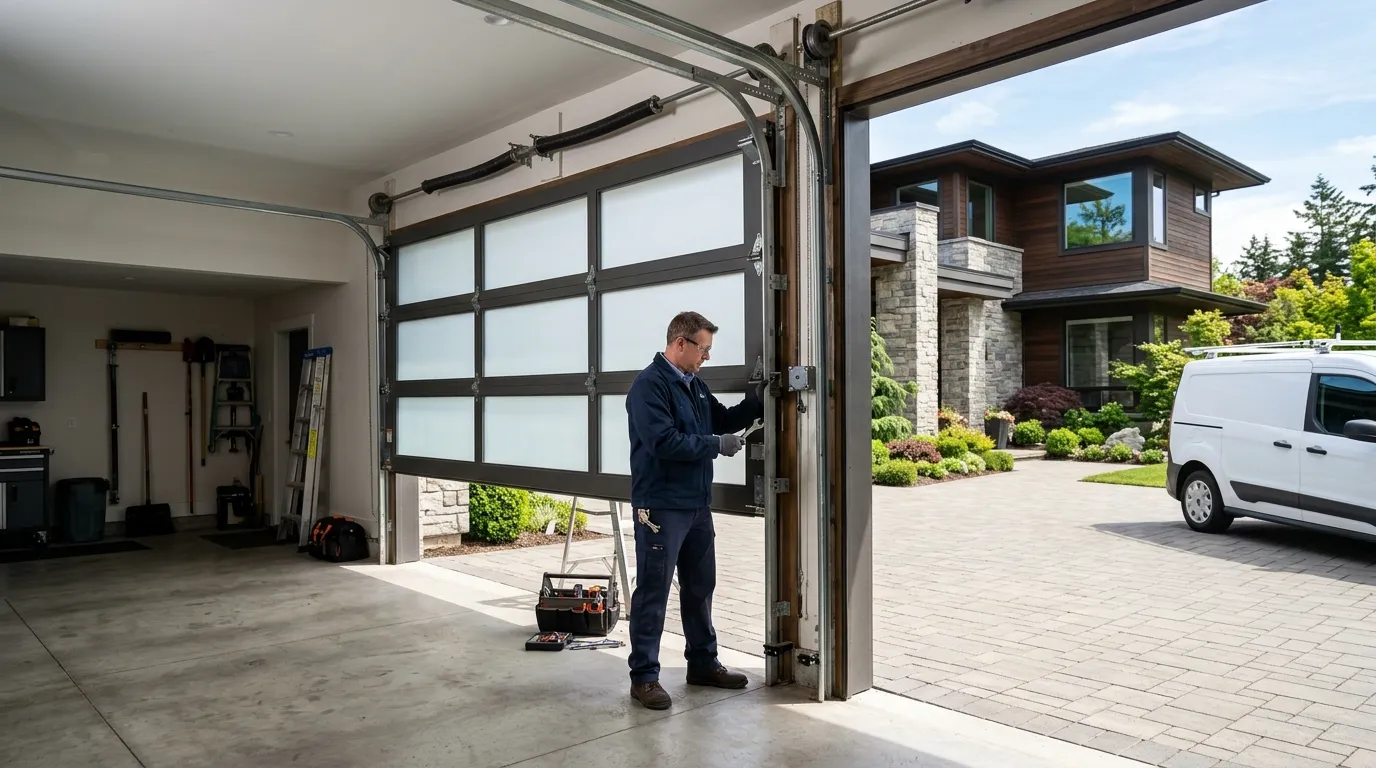
Most calls start the same way: a door that won't lift, or one that lifts and slams back down. We check the torsion spring first, because on a house from the 1980s or 90s that's almost always where the failure starts - the spring has done its rated number of cycles and the steel has fatigued. If the spring's intact, we move to the track, checking for bent rail or rollers worn oval from age, then the cable drums and the opener's force and travel settings. On the original steel doors common across this stretch of housing (1975-2011, median build year 1988), the hardware is standard enough that we carry the sizes that fit it on the truck. We replace what's failed, not the whole assembly, unless the drum or shaft is scored enough that a new spring would just tear it up again. Every repair gets tested through a full open-close cycle under load before we call it done, not just a visual check with the door resting on the springs.
The 14 named areas we work, from Riverside and Old Town near the center out to Andale and Sedgwick on the edges, were mostly built out in that same 1980s-to-90s wave, and the doors that went in then are still on a lot of those houses. Steel doors from that era were built for a cold-moderate climate, not a mild one - which is right for Wichita, but it means the torsion springs and track were sized for real freeze-thaw cycling, not just cosmetic temperature swings. Over three-plus decades, cold mornings stiffen the lubricant in the rollers and shrink the steel just enough that a marginal spring or a slightly bent track finally gives out. It's not one bad winter that does it - it's thirty of them, wearing on hardware that was never meant to run forever. That's why a door failure here tends to show up on a cold morning even though the underlying wear happened all year.
The most common version we see: the door is slow and heavy in the morning, then seems to loosen up by afternoon. That's not the opener weakening - that's a spring that's lost tension, and cold steel makes it worse before the day warms it back up. A close second is a cable that's started to fray at the drum, usually visible as small wire hairs catching light near the bottom bracket. Less common but more urgent is a door that comes down fast and uneven, dropping harder on one side than the other - that's usually one cable or one spring gone while the other side is still holding, and it's not safe to keep opening the door that way. If your opener is straining, clicking, or reversing mid-close, that's often the opener trying to lift a load the spring should be carrying, not an opener problem at all.
Lubricating the track and rollers, tightening loose hinge bolts, and clearing debris from the bottom seal - those are fine to do yourself, and they'll extend the life of hardware that's already stressed by three decades of use. What we don't recommend, and won't walk someone through over the phone, is touching a torsion spring. It's under enough stored tension to break a bone or worse if the winding bars slip, and there's no safe shortcut version of that job. If your door is original to a house built in that 1975-2011 window and the spring has never been replaced, it's worth assuming it's near the end regardless of how it looks. We'll say plainly when a door's track or panel damage means replacement makes more sense than another repair - patching an old door forever isn't cheaper in the long run, and we'd rather tell you that up front.
Cold steel and stiff lubricant make a marginal torsion spring feel worse right when temperatures are lowest, then it seems to loosen as the day warms. It's almost always the spring losing tension, not the opener, especially on a door that's been through many Wichita winters already.
Across the service area, housing runs 1975 to 2011 with a median build year of 1988, and most of the 14 named areas we cover match that same 1980s-90s wave. A lot of original steel doors and hardware are still in place and nearing the end of their rated life.
No. A wound torsion spring holds enough force to cause serious injury if the winding bars slip, and there's no safe DIY shortcut. Track lubrication, hinge bolts, and seal cleaning are fine to handle yourself - the spring itself isn't.
We cover the surrounding named areas as well, including Bel Aire, Park City, Maize, Haysville, Valley Center, Derby, Goddard, Andover, Colwich, Rose Hill, Clearwater, Mulvane, Sedgwick, and Andale, alongside the closer-in neighborhoods within a few miles of downtown.
Call now or request a free quote - same-day service on most repairs, upfront written pricing.
