Wichita, KS · Garage Door Service
Serving Wichita homes built mostly 1975-2011, we diagnose and fix the spring, track, and opener failures common to this area's housing stock and cold winters.
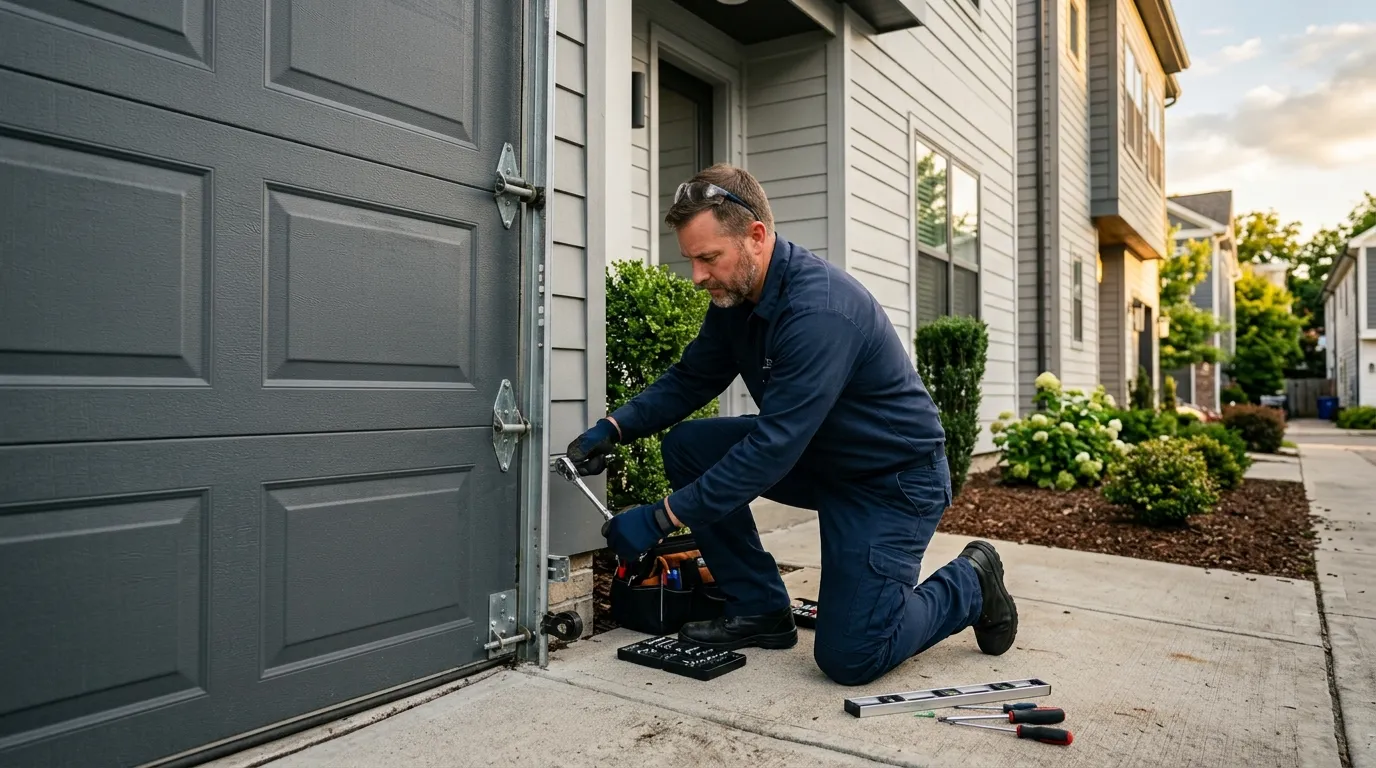
We start by watching the door run a full cycle before we touch anything, because a door that catches at the same spot every time is telling you something different than one that groans the whole way up. On a torsion spring system, we check cycle count and coil gap first - most of the doors we get called out on across the Wichita area were installed when the house went up, and with median construction landing around 1988, a lot of that original hardware is well past its rated life. If the spring is undersized for the door weight, which shows up often on the heavier insulated doors added during remodels, we size it correctly rather than just swapping like for like. Track alignment gets checked with a level, not by eye, because a track that's off by a quarter inch at the header can still let a door close but will wear the rollers unevenly for months before it binds. We also check the bottom bracket and cable drum for fraying, especially on doors that see daily two-car use. Every part we pull gets shown to you before we install anything - no story about why, just the worn part in your hand. We don't grease-and-go; if the underlying issue is a bent track or a weak spring, a squirt of lube just buys you a few quieter weeks before the same call comes back.
Wichita's housing stock across the service area - the 14 named neighborhoods we cover, from Old Town a mile out to Andale seventeen miles northwest - runs mostly 1980s to 90s construction, with the broader window stretching 1975 to 2011. That matters because torsion springs are rated in cycles, not years, and a door installed in 1988 that's opened twice a day has put well over the number of cycles most standard residential springs are built for. We see the failures cluster in that same band: original springs finally letting go, original openers with worn gear sets, and steel tracks that were fine for the original lighter door but never re-checked when a homeowner upgraded to a heavier insulated panel. Add in the cold moderate climate here - steel contracts in a hard freeze, and a track or spring already near the end of its life is more likely to bind or snap on a cold morning than in July. This isn't a Wichita-specific defect in the doors themselves; it's what happens when a large share of a metro's houses hit the same age threshold at close to the same time, and the cold adds the final stress that pushes a marginal part over the edge.
The call we get most from this stretch of housing sounds the same: the door was fine yesterday, and this morning it either won't move, moves a few inches and stops, or comes down hard and fast on one side. That last one is usually a broken torsion spring - one side lost its tension and the opener is trying to lift the whole door on the other spring alone, which it isn't built to do. A door that shudders or jerks partway up, especially on a colder morning, often points to a track that's slightly bent or rollers that have flattened after years of the original hardware. If the opener runs but the door doesn't move at all, that's frequently a stripped gear inside an aging opener unit, common on the ones installed alongside the house rather than replaced since. None of these are cosmetic - a door stuck halfway or slamming down is a safety issue, not just an inconvenience, and it's worth a same-day look rather than working around it for a week.
Some of this is fair game for a homeowner with basic tools. Tightening loose hardware, cleaning and lubricating rollers and hinges, and checking that the photo-eye sensors near the floor are aligned are all reasonable weekend jobs. What we don't recommend touching yourself is anything involving the torsion spring or the cables under tension - a spring holds enough stored energy to cause a serious injury if it lets go while you're working near it, and setting spring tension correctly requires winding bars and knowing the right number of turns for the door weight, not guesswork. If your door is one of the original units from when the house was built and the opener motor is starting to strain or hesitate, replacing the spring alone may just shift the next failure to the opener a few months later - sometimes the honest answer is that the door's had a long run and a full replacement makes more sense than another round of patch repairs.
More info: Wichita Garage Door Pros
It rarely happens out of nowhere - torsion springs are rated for a set number of open-close cycles, and a lot of Wichita houses still have the original spring from construction in the 1980s or 90s. After decades of daily use, the metal fatigues and lets go, often on a cold morning when the steel is already tighter.
It's common, not normal to ignore. In our cold moderate climate, steel tracks and springs contract slightly in a hard freeze. If the hardware is already worn or slightly misaligned, that small contraction is often enough to make a door bind or hesitate that ran fine the day before.
We work across the wider service area, including places like Bel Aire, Park City, Maize, Derby, and Goddard, along with the closer-in areas like Riverside and Old Town. If you're within roughly a 15 to 20 minute drive of Wichita, give us a call and we'll confirm.
Depends on the age and what's failing. If the motor and gears are original to a house from the 1980s or 90s and the opener is straining or grinding, patching one part often just moves the next failure a few months down the road. We'll tell you honestly which side of that line your unit is on.
Call now or request a free quote - same-day service on most repairs, upfront written pricing.
