Wichita, KS · Garage Door Service
Wichita Garage Door Pros installs new garage doors across Wichita, KS, matched to homes built mostly between 1975 and 2011 and rated for cold winters.
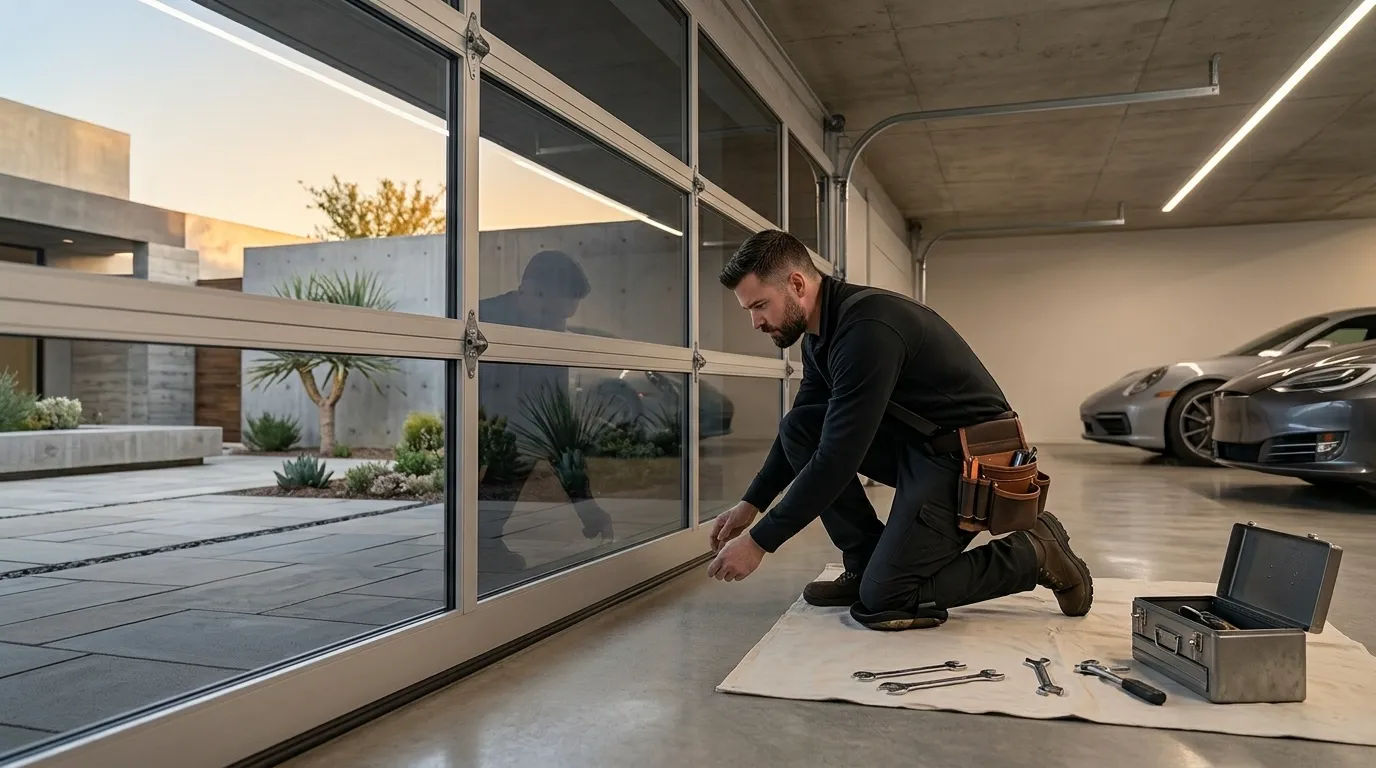
A proper install starts with the opening, not the door. Most of the houses we work on across Wichita went up between 1975 and 2011, with a heavy concentration of builds clustering around 1988 - so the header height, jamb material, and track clearance follow a fairly predictable set of patterns from that era. We measure the rough opening, check the header for square, and size the torsion spring to the actual panel weight of the door going in, not a generic chart number. Because Wichita sits in a cold-moderate climate band, we default customers toward a foam-core steel panel instead of the hollow single-layer steel or wood doors that builders hung on these houses in the 80s and 90s. Those old doors were never rated for the temperature swings this area sees, and it shows in how they perform by year ten. We set the track plumb, balance the door on the springs so it holds at any point by hand, and program the opener's travel limits and force settings before we call the job done. If the existing header or jamb is out of square from decades of settling, we address that before the new door goes in - hanging a new door on a bad frame just moves the problem down the road.
The failure pattern here comes from stacking two things on top of each other: housing stock and climate. A large share of Wichita's garage doors were installed when the house was built, somewhere between 1975 and 2011, and across the 14 named areas we work in - from Riverside and Old Town near the core out to Bel Aire, Maize, and Park City - that mostly means 1980s and 90s construction with builder-grade doors. Those doors were single steel skin or hollow-core, no insulation layer, installed to meet a budget line item rather than a temperature range. Wichita's cold-moderate climate band puts real stress on that kind of panel: repeated freeze-thaw cycling works at the seams, the thin steel oxidizes from the inside where condensation collects, and the bottom seal hardens and cracks faster than it would in a milder zone. None of that is a manufacturing defect - it's just what happens when a 30-plus-year-old panel built for a different era meets 30-plus winters. By the time a homeowner notices the door dragging or the bottom corner curling, the steel itself has usually gone soft, and patching it just buys another season or two before you're back to square one.
The most common call we get is a door that's gotten heavy - it used to lift with one hand and now it fights the opener, or the opener strains and reverses partway up. That's usually a panel that's absorbed years of moisture and warped slightly out of true, which throws off the balance even if the springs are fine. Second most common: daylight at the bottom corners in winter, which on these older single-layer doors means the weatherstrip has hardened past the point of sealing and cold air is coming straight through. A third pattern shows up as rust freckling along the bottom two panels, worse on the side that gets more weather - that's the steel skin failing from the inside out, and once it starts it doesn't stop. If you're hearing a grinding or popping sound as the door travels, that's often the roller track working loose from decades of the door's own weight pulling on aging hardware, not something a can of lubricant fixes for good. Any of these on their own might be a repair. Two or three together on a door installed with the house usually means it's cheaper to replace than to keep chasing.
Some of what leads up to a new door is fine to handle yourself - clearing and cleaning the track, checking that the photo-eye sensors are aligned, replacing worn weatherstrip on the bottom panel. Full installation isn't in that category, and we'll say that plainly. A residential door section weighs enough that an unbalanced lift can pull a shoulder or drop a panel on a foot, and the torsion spring holding the whole assembly under tension can put someone in the hospital if it's wound or released without the right bars and a clear sense of how much force is stored in it. That's the honest limitation here: we don't sell you a door and walk away, because the install is the part that actually matters for how it performs over the next twenty winters. Where we do draw a line is on jobs where the header or framing needs structural repair beyond the door itself - that's carpentry work, and we'll tell you to get that handled first rather than force a door onto a frame that isn't square. If you're comfortable with basic maintenance, do that between visits. Leave the spring tensioning and panel hanging to someone who does it as a trade.
It depends heavily on the door type and the decade it was built for. A lot of the doors going bad now were installed with houses built between 1975 and 2011, and the uninsulated steel and wood doors common in that period tend to show real wear - rust, warping, hardened seals - within 20 to 30 years in a cold-moderate climate like Wichita's. Insulated doors installed today are built for a longer service life.
You don't need one by code, but given Wichita's cold-moderate climate band, an insulated foam-core panel holds up better against the freeze-thaw stress that breaks down older single-layer steel and hollow doors. If your garage shares a wall with living space, the difference is also noticeable in comfort, not just in how long the door lasts.
We cover Wichita and the surrounding communities including Bel Aire, Park City, Maize, Haysville, Valley Center, Derby, Goddard, Andover, Colwich, Rose Hill, Clearwater, Mulvane, Sedgwick, and Andale, along with the in-city areas like Riverside, Old Town, Sunflower, and Chisholm Creek.
If the issue is one thing - a broken spring, a bent panel, a misaligned track - repair usually makes sense. If you're seeing rust across multiple panels, warping that's thrown off the balance, and hardened seals all on a door that went in when the house was built, you're usually better off replacing it than patching a door that's past its working life.
Call now or request a free quote - same-day service on most repairs, upfront written pricing.
