Wichita, KS · Garage Door Service
Wichita's housing stock runs 1975-2011, median 1988 - and a cold moderate climate means aging torsion springs are more likely to snap on the first hard freeze.
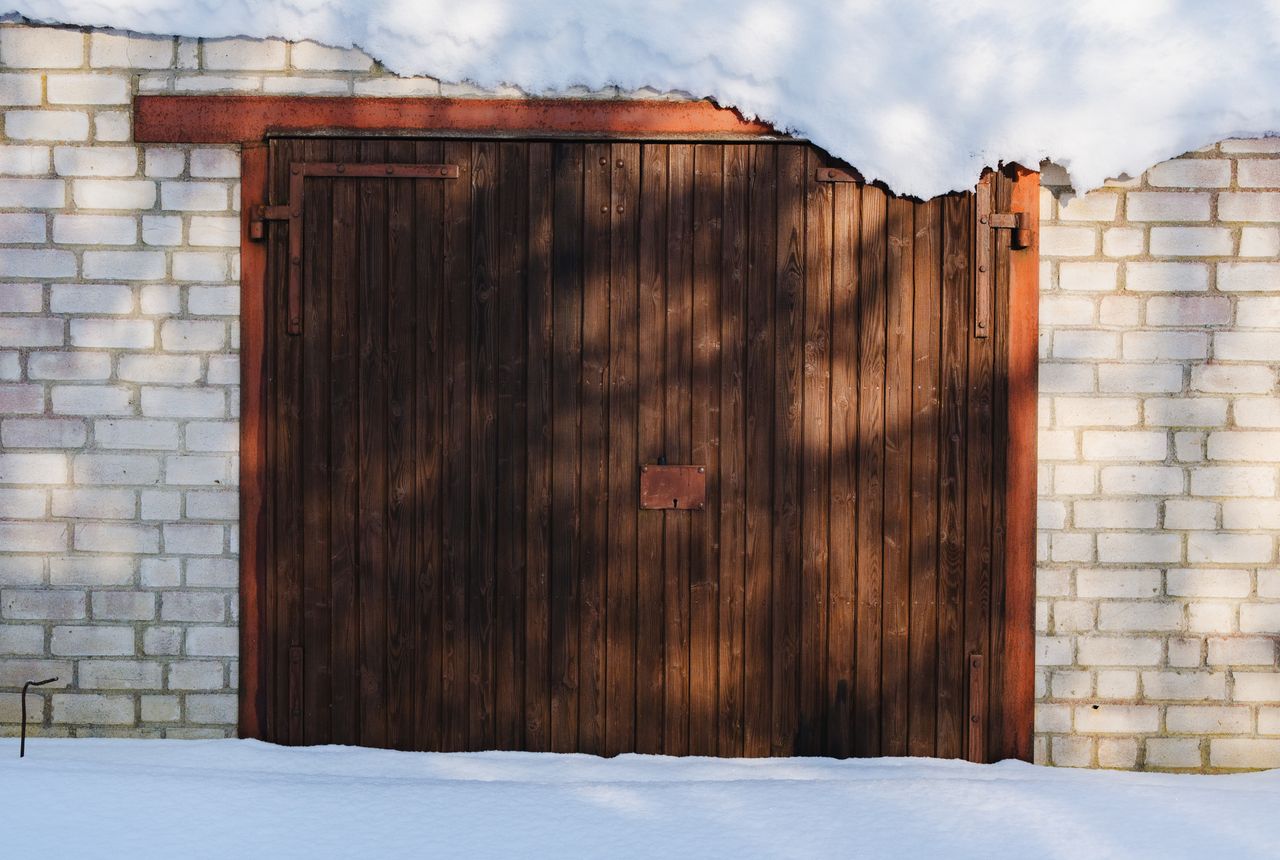
Pull the release handle, disconnect the opener, and lift the door by hand. If it feels heavy, drops on its own, or one side rises faster than the other, the springs are losing tension - that's true whether the door is five years old or thirty. What's worth knowing here is how old your springs probably are. Most houses across this service area went up between 1975 and 2011, with the median build year around 1988. If your door and hardware are original to the house, you're likely running springs that are already past the cycle count they were rated for.
Look at the coil itself. Gaps between coils that are wider on one side, rust streaks down the winding cone, or a spring that looks stretched rather than tightly wound are all signs of fatigue. Listen for a bang from the garage on a cold morning - that's sometimes a spring letting go, not the house settling. Check the cables too; a frayed cable under tension is as dangerous as a broken spring and just as common on hardware from the 80s and 90s stock that makes up a lot of this area's garages.
Torsion springs are rated for a set number of open-close cycles, and steel doesn't care whether it fails in July or January - but cold changes when it fails. Steel contracts and gets less flexible in cold weather, so a spring that's already fatigued from decades of cycling has less give left when the temperature drops. Across the 14 named areas in this service area, the bulk of the housing stock dates to the 1980s and 90s, which means a large share of original torsion springs are sitting right at that 30-to-40-year mark where fatigue failure becomes common.
The usual sequence: the spring has been slowly losing tension for months, the opener has been straining to compensate, and then a cold snap tightens the steel just enough to finish the job. The door either won't lift at all, or it drops fast and hard when the last bit of tension gives out. That second version is the dangerous one - it happens with no warning on a door someone is standing under.
This area sits in a cold moderate climate band. That's not the harsh end of the scale, but it's enough swing between summer heat and winter cold to put real stress on steel hardware and on the grease packed into rollers and hinges. Cold grease thickens, rollers bind slightly, and the opener motor has to work harder to force a door through a cycle it used to handle smoothly. Over a few winters, that extra strain shows up as burnt-out opener gears or springs that finally let go.
With 23,179 owner-occupied houses in this service area, and median household income around $82,000, most owners here are in a position to replace rather than patch when hardware from the 1988-era median build finally reaches the end of its life. That matters because a full spring and roller replacement, done once, outlasts a string of small repairs on aging steel - and in a climate that swings hard enough to matter, a fresh spring set handles the cold a lot better than one that's already fatigued going into winter.
The mistake we see most is waiting for the squeal to become a bang. A spring that's audibly straining - grinding, popping, or making the opener chain jump - is telling you it's near the end, and cold weather is exactly when it tends to finish failing. Owners often spray a can of lubricant on the coil and call it fixed. Lubricant helps rollers and hinges; it does nothing for a spring that's mechanically fatigued.
The other version of this mistake is assuming a door built in the 80s or 90s, original to a house from that era, still has factory-fresh hardware just because the door itself still looks fine. Springs wear out long before the panels do.
Here's the limitation worth being honest about: we can't tell you over the phone whether what's wrong is the spring, the cable, or the opener logic board - that takes hands-on inspection. And once a spring has visibly separated or the door has dropped, that's not a tighten-it-yourself job. Torsion springs are under enough tension to cause serious injury, and that risk doesn't change with the season.
If you haven't had it replaced and the house was built in the 1975-2011 window common to this area, assume it's original until told otherwise. Springs rarely get swapped unless they've already failed, so an untouched spring on an 80s or 90s house is likely near or past its rated cycle life.
Cold makes grease thicken and steel stiffen slightly, so rollers bind a little more and springs have less flexibility to work with. On a door with fatigued hardware, that extra resistance is often what pushes a weak spring into failure.
Only if you disconnect the opener first and lift slowly. If the door feels unusually heavy or drops on its own partway, stop - that's a sign the spring has already lost most of its tension, and it can let go without warning.
On a two-spring door, most of the time both springs are the same age and have gone through the same cycles, so replacing only the broken one leaves a mismatched, unevenly worn pair. It's a judgment call best made after a hands-on look at both springs.
Call now or request a free quote - same-day service on most repairs, upfront written pricing.
