Wichita, KS · Garage Door Service
Most Wichita homes date to the late 1980s. Here's how to tell if your original door and hardware are worth repairing or if it's time to replace.
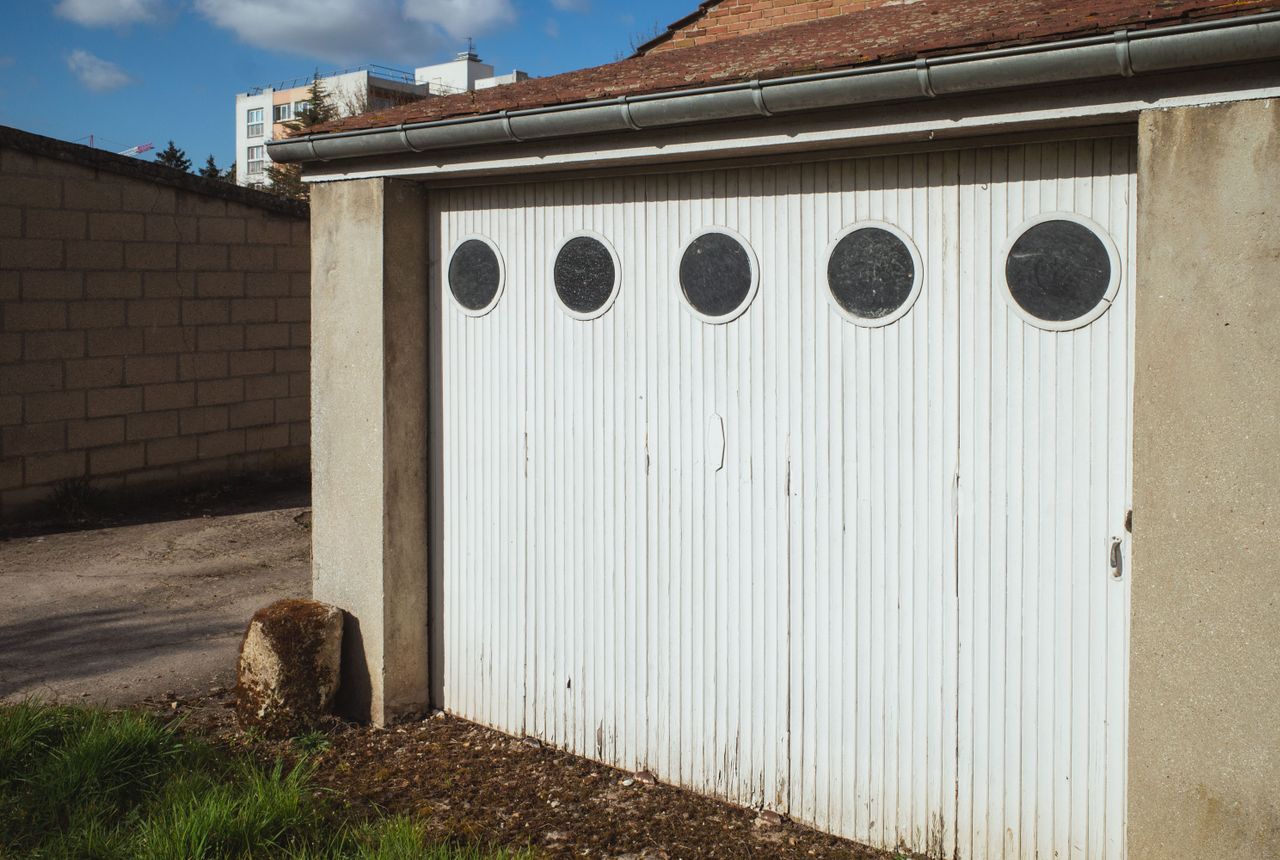
Start with the springs, not the panel. Most houses across this service area went up between 1975 and 2011, with the median build year sitting around 1988, so the doors we're asked to save are usually thirty-plus-year-old steel or wood-composite panels on torsion hardware that hasn't been touched since the Reagan administration. Pull the release and lift the door by hand. If it's balanced and stays where you set it, the springs are still doing their job and the motor is just along for the ride. If it slams down or won't budge, the spring has lost tension and that's a parts-and-labor call, not a lubricant fix.
Next look at the bottom two feet of the track on both sides. Surface rust is normal. Pitting deep enough to catch a fingernail, or a track that's bowed outward at the base, means the rollers have been grinding metal against metal for years. Check the panel seams too - hairline separation between sections on a steel door usually means the hinges have stretched their holes. None of this means replace the whole unit. It means you're looking at hardware, not a door.
The trouble with a door this age is that the parts don't match anymore. Because the stock across the 14 areas we cover is mostly 1980s and 90s construction, a lot of the openers still running are chain-drive units with worn gear sets that predate today's safety reversal standards. The door itself might be fine - a solid piece of 24-gauge steel outlives most of what replaces it - but the opener, the torsion spring, and the bottom seal age on different clocks. We regularly find a good door bolted to hardware from three different decades because previous fixes were done piecemeal, one failure at a time.
That patchwork isn't a defect, it's just what thirty-plus years of ownership looks like. The question isn't whether the door is old. It's whether the failure in front of you is a $200 hardware problem or a sign the whole assembly is past the point where new parts have anything to grab onto.
Wichita's winters swing hard enough that a door built for the original 1980s spec has usually gone through a few dozen freeze-thaw cycles on its rollers and bottom seal before anyone calls us. Steel doesn't like being cold one week and 60 degrees the next - it's what stresses hinge bolts loose and turns a quiet door into a rattling one. A galvanized torsion spring rated for a moderate cold climate holds up fine for fifteen or twenty years, but original hardware from a house built near the 1988 median has usually had thirty.
The bottom seal is the part we replace the most and the one owners notice the least, until a Kansas cold snap pushes drafts and grit straight into the garage. On a door that's otherwise sound, a new seal and a weather-matched roller set often solve what feels like a bigger problem. It's cheap, it's fast, and it's usually the actual fix - not the excuse to sell someone a new door.
The mistake we see most is treating every symptom on an old door as proof the door is done. A loud door, a slow door, a door that sticks halfway up - none of that by itself means replace. With a median household income of $82,000 across the area, most owners we talk to would rather spend $200 on a spring and cable job than $1,200 replacing a door that still has good bones, and in most cases they're right to.
Where replacement actually wins: a wood-composite panel that's delaminated from moisture, a frame that's rusted through at the bottom corners, or a track that's been bent hard enough that no amount of realignment holds it straight. Across the 39,080 households and 23,179 owner-occupied houses in this area, we still find plenty of original steel doors from the 1980s and 90s that just need new hardware, not a full tear-out. Our honest limit: if the rot or the bend is bad enough, we'll tell you to replace it rather than take a repair job we know won't hold.
Disconnect the opener with the manual release cord and lift the door by hand. If it's heavy, drops fast, or won't stay put on its own, that's the spring losing tension - not the motor. If the door moves fine by hand but the opener won't lift it, the problem is electrical or gear-related inside the unit itself.
Often, yes. A lot of the doors from that era across this service area are solid 24-gauge steel that's outlasted the hardware bolted to it. If the panels aren't rusted through or bent, replacing springs, rollers, and the bottom seal usually gets you another decade or two out of a door that still fits its opening well.
Cold makes steel contract and grease stiffen, so worn rollers and dry hinges make more noise in a Kansas winter than they do in July. It's usually not a new problem, just an old one getting louder. New rollers and a fresh lube pass on hinges and track solve most of this.
When the frame or bottom panel has rusted or rotted through, or the track has been bent hard enough that it won't hold alignment after a repair. At that point new parts have nothing solid to attach to, and we'll say so rather than sell a fix that won't last.
Call now or request a free quote - same-day service on most repairs, upfront written pricing.
