Wichita, KS · Garage Door Service
A look at what actually happens during a Wichita garage door service call, tied to the area's 1975-2011 housing stock and cold-moderate climate swings.
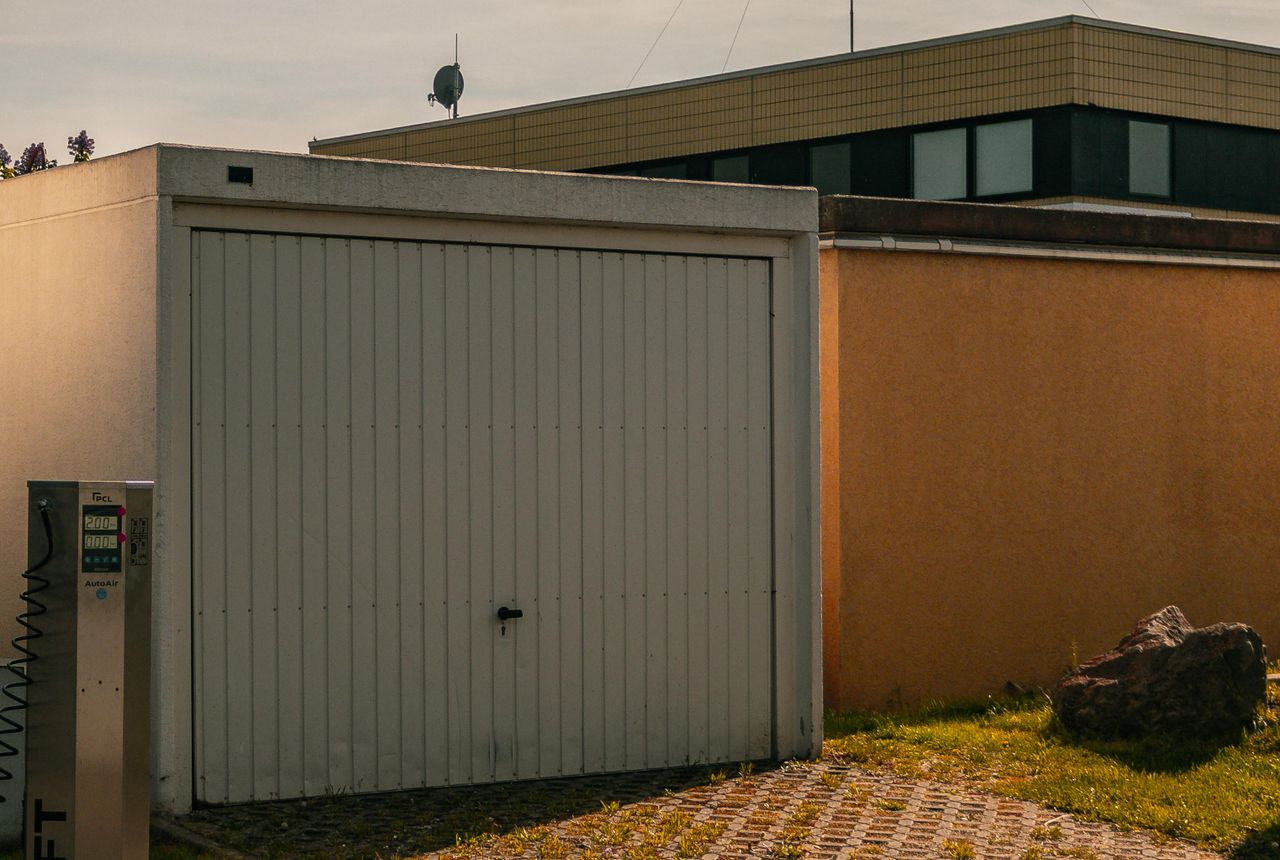
Before you call anyone, look at three things. First, the springs - most Wichita garage doors are running on torsion springs installed when the house was built, and across this service area that's typically somewhere between 1975 and 2011, with a lot of it clustering around 1988. A spring that age either looks fine and is about to go, or it's already showing a gap in the coil. Second, the opener. If it's the original unit from a house in that same build window, the logic board and the drive gear are the parts that fail first, not the motor housing. Third, the track - pull the door halfway by hand (disconnect the opener first) and feel for binding. If it drags in the same spot every time, that's a bent section, not a lube problem.
What you can't check yourself is spring tension and cable wear from the ground, and that's the honest limit here - we don't recommend homeowners get on a ladder to eyeball a torsion spring under load. That's the one thing worth a call even if everything else checks out fine.
The doors going up in Wichita subdivisions from the late 1970s through the early 2000s used a fairly narrow set of hardware - steel rollers, single or double torsion springs sized for the door weight at the time, and openers rated for that era's chain-drive standard. Thirty to forty years later, that hardware is at or past its cycle life, and it's failing in the same order house after house: spring first, then cable, then the opener's drive gear once the motor starts working harder to compensate for a weak spring.
We see this pattern across the named areas in this service territory - Old Town a mile east, Riverside a mile northwest, out through Sunflower and South Central - because they were mostly built in the same stretch of decades. A service call in this area is rarely a mystery. It's usually the predictable end of a part that was never designed to last past the 30-year mark, showing up now because the house it's on finally hit that age.
Wichita sits in a cold-moderate climate band, which means the doors here go through real freeze-thaw cycles every winter on top of hot, dry summers. That swing matters more than people expect. Steel contracts in the cold, which is when a spring that's already fatigued from thirty-plus years of cycling is most likely to snap - usually on the first genuinely cold morning of the season, not gradually. It's also when nylon rollers crack and weatherstripping that's gone stiff stops sealing.
This is why a lot of our calls cluster in late fall and again after the first hard cold snap: houses across this service area, whether it's a 1980s build out in Chisholm Creek or a 1990s one in Riverview, are running hardware that was fine in July and is suddenly the reason the door won't move in December. A service call in that window usually involves more than the part that broke - we're also checking whether the rest of the hardware, tempered by the same weather, is close behind.
The mistake we run into most is homeowners assuming a noisy or slow door means the opener is dying, when on a house from this era it's almost always the spring or the rollers doing the extra work the opener is compensating for. Replacing the opener on a door with a worn-out spring just moves the strain to a new motor, and it'll show the same symptoms again within a year or two.
The other version of this mistake is waiting until the spring actually breaks before calling, on the logic that if it hasn't failed yet, it's fine. On hardware that's been in service since the 1980s or 90s,
If the door is heavy to lift by hand with the opener disconnected, it's the spring, not the opener. Openers rarely cause a door to feel physically heavier - they just struggle more when the spring isn't carrying its share. On houses from this area's typical 1975-2011 build range, spring wear is the far more common cause.
Wichita's cold-moderate climate means real temperature swings between summer and winter, and steel components that are already fatigued tend to fail on the first hard cold snap rather than gradually. If your door is original to a house built in the 1980s or 90s, that seasonal stress is often what finally breaks a weak spring.
Depends on the failure. A drive gear or logic board on an older chain-drive unit is often a straightforward swap. But if the opener is original to a house from the 1980s and multiple parts are going at once, replacement usually costs less over time than repeated repair calls.
Yes - the service area covers the named areas near Wichita out to towns like Rose Hill, Clearwater, Mulvane, and Andale. Housing stock across those areas is largely from the same 1970s-through-2000s building wave, so the common failures we see are consistent from one to the next.
Call now or request a free quote - same-day service on most repairs, upfront written pricing.
