Wichita, KS · Garage Door Service
Serving Haysville, KS from Wichita, 9 miles out. We work on the torsion springs, openers, and steel doors common to homes built around 1988 here.
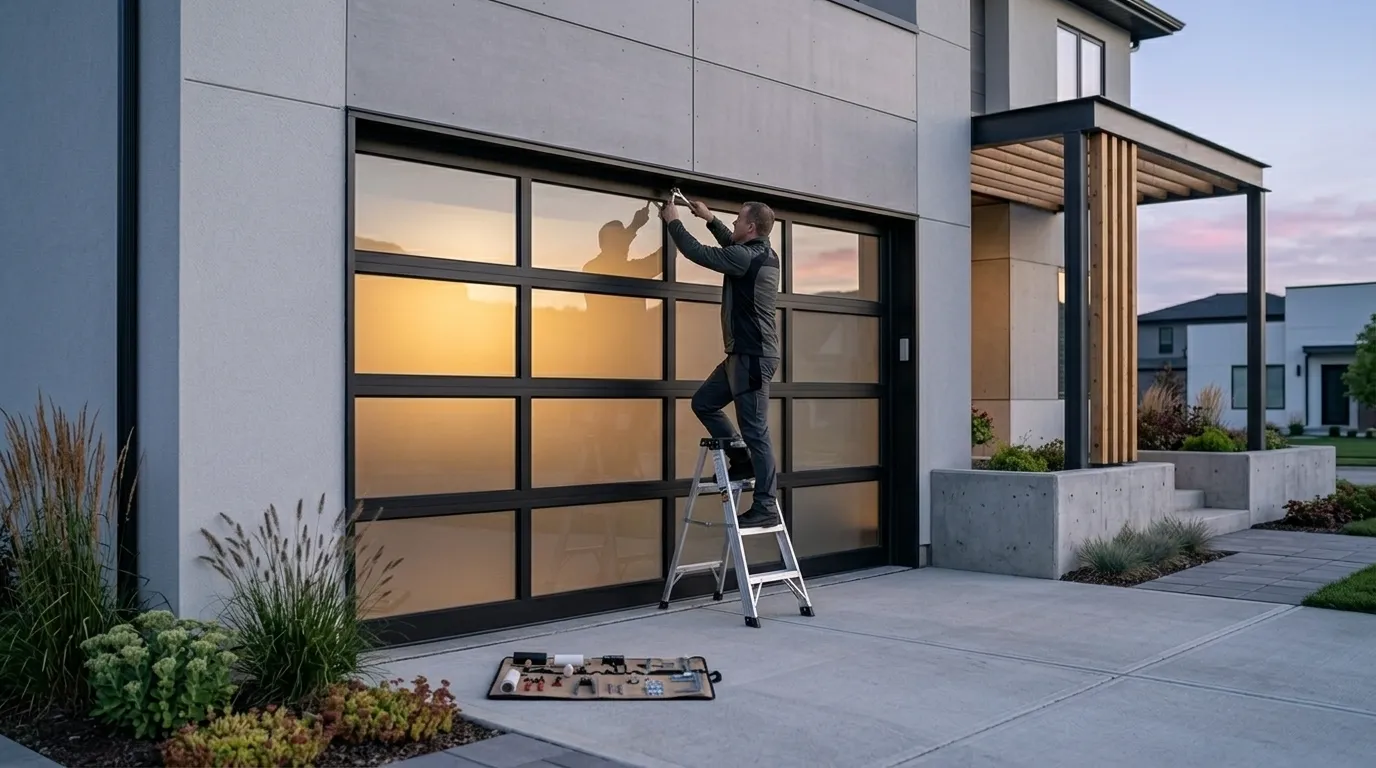
We drive out to Haysville, about 9 miles from our Wichita shop, for the same handful of jobs over and over. Torsion springs that snap on a double door. Openers from the 1990s and early 2000s that finally give out - the circuit board goes, or the drive gear strips. Rollers that have worn a groove into the track after enough years of the same door going up and down twice a day. Cables fraying where they wrap the drum. With a median year built of 1988 across Haysville, a lot of what we see is original hardware that's simply reached the end of its service life, not something installed wrong. We also handle bent tracks from a car bumper meeting a door, and panel replacement when hail or a mower has dented a section. Because the broader service area runs from 1975 to 2011 in build years, we carry parts for both the older torsion setups and the newer extension-spring and belt-drive systems, and Haysville sits closer to the older end of that range.
We don't do wood door refinishing or custom carriage-house builds - that's a specialty carpentry job, not a garage door repair. If a spring has been rigged with a bungee cord or a C-clamp by a previous owner, we'll tell you straight that it needs full replacement, not a patch, and we won't just tighten what's there. We also won't quote a repair over the phone sight unseen on anything involving a broken torsion spring; that's a two-person, right-parts job and guessing wrong on spring size can wreck a new opener fast. And if your opener is a decades-old chain-drive unit with a burnt motor, sometimes the honest call is a new opener instead of chasing parts for one that's already near the end of its run - we'll say so rather than bill you for a repair that won't hold.
Haysville's housing stock runs to a median build year of 1988, right in line with the 1975-2011 range that covers the wider Wichita service area, and it fits the 1980s-90s pattern that shows up across most of the 14 named communities we cover. That means most garages here were built with steel sectional doors and torsion spring systems already standard - not the older side-mounted extension springs you'd find in an older core neighborhood. With 3,970 households in Haysville and a median income of $69,057, this is solidly single-family, owner-occupied territory, and most of those garages have seen one or two openers come and go since the house was built. The climate here falls in the moderate-cold band, which matters more for weatherstripping and bottom seals than for structural load, but it's a factor we account for on any door or seal replacement.
A house built in 1988 usually still has its original torsion spring hardware even if the opener's been swapped once or twice - torsion springs from that era were built to last 10,000-15,000 cycles, and most Haysville garages have long since burned through that count. That's why a spring snapping without warning is the single most common call we get out here. It's also why we check the drum and cable condition any time we're replacing a spring on a door this age - if one part failed from cycle fatigue, the parts next to it usually aren't far behind. Compare that to a house built after 2005, where you're more likely dealing with a failed circuit board on a newer opener than worn-out springs. Knowing the build era before we get there means we show up with the right spring size and drum for a 1980s door instead of guessing.
No - we run out of Wichita and drive to Haysville, about 9 miles out, for every job. We don't stage a truck or keep parts stored in town; everything comes with us from the shop.
Torsion springs are rated for a set number of open-close cycles, usually 10,000-15,000. Most Haysville homes date to around 1988, so a lot of original springs are well past that count. They don't weaken gradually - they hold until they don't, then snap.
It depends on the age and what's failed. A worn drive gear or a bad sensor is usually a straightforward fix. A burnt motor or a dead board on a decades-old chain-drive unit is often not worth chasing parts for - we'll tell you when replacement makes more financial sense than repair.
Call now or request a free quote - same-day service on most repairs, upfront written pricing.
